Read six guides to where to stay in Athens and you will have read one guide six times. Plaka for first-time visitors. Monastiraki for nightlife. Kolonaki for luxury. The wording shifts, the ranking never does. What is strange is that they already know better: the same guides warn about inflated prices, crowds and restaurants that exist only for tourists, and then recommend the neighbourhood anyway.
Look at what that ranking assumes. Koukaki and Pagrati get filed under local vibes, a category reserved for repeat visitors and people specifically hunting authenticity, while the default advice for somebody who has never been here points at the district those same guides concede is the priciest and most crowded in the city. Living among Athenians is treated as an advanced setting you unlock on your second trip.
Six guides. One answer. Plaka for first-timers.
We would turn it around. Plaka is the specialist choice, for three days of concentrated sightseeing by people content to eat badly. Everything else, including a first visit, is better served one ring out: Pagrati, Ampelokipoi, Kypseli, Petralona, Neos Kosmos. Less money, more space, and evenings spent among people who live in Athens rather than people photographing it. The commute is ten to twenty minutes, usually on foot. That is not a compromise. It is the deal of the century, and Athenians have known it for decades.
The centre was empty at night
Here is the part almost no guidebook explains, and it changes how you read the city. The historic centre of Athens was not, for most of the last half-century, where Athenians lived. It was where they worked.
Post-war Athens rebuilt itself through antiparochi, the arrangement where a landowner handed a plot to a builder in exchange for apartments in whatever went up. It produced the polykatoikia, the concrete apartment block with the awnings, and it produced them everywhere at once. As the city spread, the middle class spread with it, out to Kifisia and Glyfada and Chalandri and the suburbs in between. What they left behind, around Omonia and Panepistimiou and the streets below the Acropolis, was offices, wholesalers, ministries and shops.
By the eighties and nineties the effect was stark. The centre filled at nine in the morning and emptied at six in the evening. Plaka survived on tourists. Whole blocks around Omonia were shuttered after dark. Athenians did not avoid the centre out of snobbery; there was simply nothing there once the offices closed.
The tourist centre is not the old Athens rediscovered. It is a business district that learned to charge for atmosphere.
What changed is recent. The last decade or so of tourism, and short-term letting in particular, poured money into those same streets. Buildings were renovated, rooftop bars appeared, and the centre became lively again. That is genuinely good for the city in most respects. But be clear about what it is: a district rebuilt around visitors, priced for visitors, and populated largely by visitors. It is not where the city’s daily life went. Its daily life went where it had already been for forty years, one ring out.
Ten minutes is not a commute
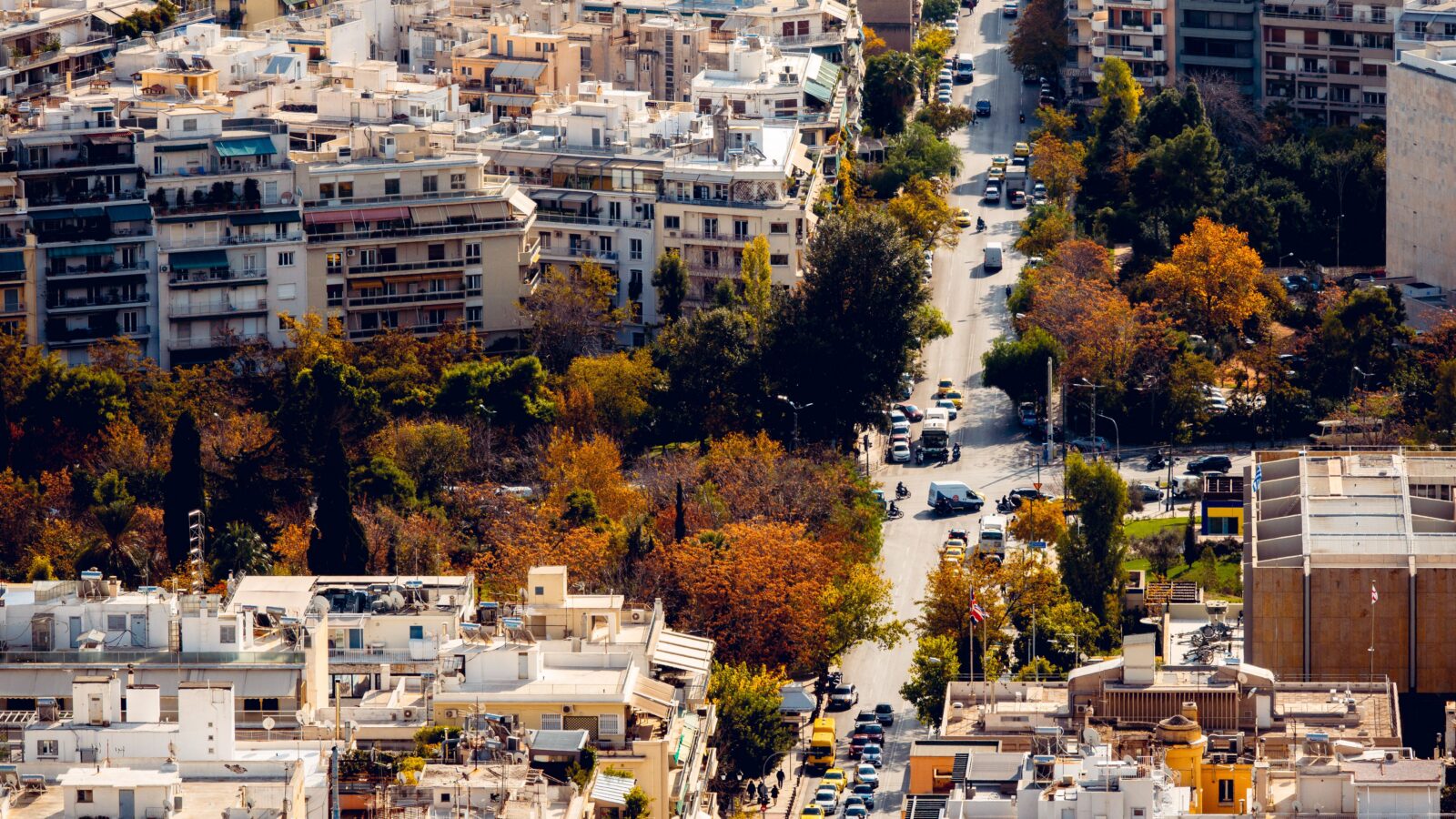
Athens is smaller than it looks. The Attica basin sprawls, but the part most people actually use is compact, and the ring of neighbourhoods immediately around the centre is close enough to walk into and far enough to have kept its own character.
Pagrati sits behind the Panathenaic Stadium, fifteen minutes’ walk from Syntagma through the National Garden, and has bakeries, a street market and tavernas full of residents on a Wednesday night. Ampelokipoi is unglamorous, well connected, and where a great many Athenians in their thirties actually live, with two metro stations and rents that reflect the absence of a view. Kypseli has the finest early twentieth-century apartment buildings in the city and a covered market that came back to life. Petralona and Thiseio give you the Acropolis from the back, quieter and cheaper. Neos Kosmos puts you a couple of stops from everything.
The trade is real and worth stating plainly. You will not step out of the door and see the Acropolis. You will walk a little further to the famous restaurants, most of which you did not want anyway.
Even for three nights
The usual concession at this point is that the centre still wins for a short visit, because time is short and every minute of walking is a minute lost. That does not hold, and the arithmetic is against it.
Central Athens is not large. From Pagrati or Koukaki or Petralona, the Acropolis, the museums and Syntagma are a fifteen to twenty-minute walk, or a few minutes on the metro. Over three days that is perhaps forty minutes of additional walking in total, through streets worth walking, and it is the same forty minutes you would spend queueing for a table in Plaka.
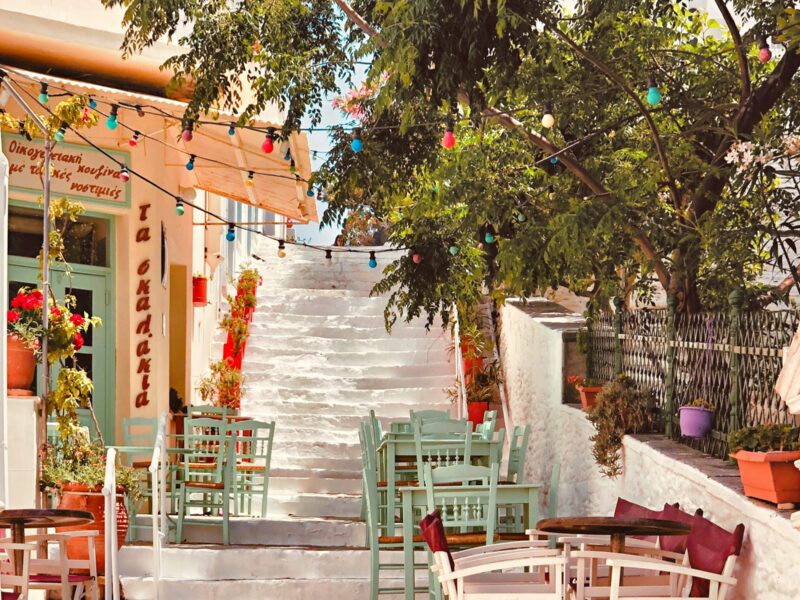
What you buy with it is the entire evening. Dinner in the tourist centre is the weakest meal in Athens and the dearest: menus in six languages, photographs of the food, staff outside inviting you in, which is the surest sign in this city that you should keep walking. Ten minutes away the same money buys you a taverna full of people speaking Greek. On a three-night visit you will eat perhaps five meals here. Losing all five to a photographed menu is a far bigger sacrifice than a twenty-minute walk.
There is also what you actually see. Stay in Plaka and you experience an Athens carefully arranged for you. Stay one ring out and you get the city as it runs: the morning bakery queue, the laiki spilling across a street, children in a square at nine in the evening, the whole apparatus of ordinary Athenian life that people fly here hoping to glimpse and then book themselves out of.
How to choose
One test settles it. Walk the area at nine on a Tuesday evening, or look at it honestly on a map and ask what would be happening there. If there are people at pavement tables and children in the square, you have found the right neighbourhood. If it is silent, it is an office district with good photographs. If it is loud in six languages, it is a stage set.
Pavement tables are the signal because Athenian social life happens outdoors, at a table, within walking distance of home, on weekday afternoons as much as at weekends. A neighbourhood without decent cafés is not a quiet one; it is one where the social life is somewhere else and you will end up travelling to it. We go into how that culture works, and where the freddo came from, in the Greek relationship with coffee.
Where to start looking: Pagrati for the full version of what this piece describes, the wider neighbourhood guide to weigh the ring against the coast and the north, and getting around Athens to sanity-check the walk before you decide it is charming.
Live in the real Athens
Furnished apartments across forty neighbourhoods, most of them one ring out.